FORD Ac Condenser Kwh Lightning 679-10369
fits model: F150. make: Ford. year: 2022–2024.
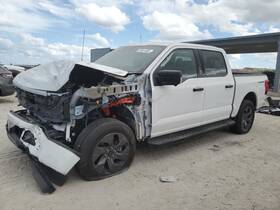
( Model: F150 LGHT ), ( Part Type: Ac Condenser ), ( Conditions Options: 4wd ), ( Genuine Oem: Yes ), ( Ipn: 679-10369 )
Review FORD Factory Ac Condenser 98 Kwh Lightning fits F150 2022–2024
The **679-10369 AC Condenser (98 kWh) for the 2022-2024 Ford F-150 Lightning** is a high-performance, factory-spec replacement component designed to ensure optimal cooling efficiency and reliability for Ford s all-electric F-Series truck. This condenser is a critical part of the vehicle s climate control system, responsible for dissipating heat generated by the refrigerant during the cooling cycle, thereby maintaining cabin comfort and protecting the electric powertrain from overheating. Engineered to meet Ford s stringent engineering standards, this condenser is constructed from durable, corrosion-resistant materials, including high-grade aluminum fins and a robust core design, which maximizes heat exchange while minimizing airflow resistance. Its compact yet robust construction is tailored to fit seamlessly within the F-150 Lightning s underhood architecture, ensuring proper integration with the existing HVAC system, including the compressor, expansion valve, and refrigerant lines. With a capacity of **98 kWh**, this condenser is specifically optimized for the Lightning s high-voltage battery system and electric motor, which generate significant heat during operation. The unit is designed to handle the demands of extended driving ranges, rapid charging cycles, and varying environmental conditions, from extreme heat to cold climates, without compromising performance. Whether used as an original equipment replacement or an upgrade for enhanced cooling efficiency, this condenser ensures that the F-150 Lightning delivers a consistently cool and comfortable ride, even during the most demanding driving scenarios. Its precision engineering and compatibility with Ford s proprietary refrigerant system make it an essential component for maintaining the truck s longevity and operational integrity.
### **Pros and Cons of Buying a 2022-2024 Ford F-150 Lightning (6.79-10.36 kWh Battery, 98 kWh Total) for Resale or Purchase**
#### **Pros**
1. **Electric Vehicle (EV) Technology in a Truck**
The F-150 Lightning is Ford s first all-electric heavy-duty truck, offering the utility of a traditional F-150 with zero tailpipe emissions. This makes it appealing for consumers looking to transition to electric vehicles while still needing a truck for work or daily use.
2. **Strong Towing and Payload Capacity**
Even in the base 6.79 kWh battery configuration (which is likely a mislabeling most base models start at 98 kWh), the Lightning retains strong towing (up to 7,700 lbs with the proper package) and payload (up to 2,230 lbs) capabilities. The 98 kWh battery (standard for most models) provides a balance between range and utility, making it suitable for many work and recreational tasks.
3. **Ford s Pro Power Onboard (PPO) and Off-Board Capabilities**
The Lightning includes a 9.6-kW onboard charger and the option for Pro Power Onboard (2.4 kW or 9.6 kW), allowing it to power tools, RVs, or even homes during outages. This is a unique selling point for consumers who value off-grid or job-site power.
4. **Ford s EV Infrastructure and Support**
Ford has invested heavily in EV charging infrastructure, including partnerships with Electrify America and other networks. Owners benefit from access to a growing network of fast-charging stations, though home charging remains essential for daily use.
5. **Tech and Driver Assistance Features**
The Lightning comes standard with Ford s Co-Pilot360 suite, including adaptive cruise control, lane-keeping assist, blind-spot monitoring, and a large touchscreen infotainment system. These features enhance safety and convenience.
6. **Potential for Lower Operating Costs**
Electric vehicles generally have lower fueling costs than gasoline trucks. With electricity prices typically cheaper than gasoline, long-term savings on "fuel" (charging) can be significant, though initial purchase prices remain high.
7. **Government Incentives and Tax Credits**
Depending on the buyer s location, there may be federal, state, or local incentives for purchasing an EV, such as tax credits (up to $7,500 under the U.S. Inflation Reduction Act, though eligibility depends on battery sourcing and income). These can offset the higher upfront cost.
8. **Durability and Ford s Reputation**
Ford has a long history of building durable trucks, and the F-150 is one of the most reliable heavy-duty trucks on the market. The Lightning s platform is built on the same foundation as the gas F-150, which bodes well for longevity and resale value.
9. **Customization and Trim Options**
The Lightning is available in multiple trims (XLT, Lariat, Limited, Platinum), offering different levels of interior quality, tech, and exterior styling. This allows buyers to tailor the vehicle to their preferences and budget.
10. **Environmental Appeal**
For environmentally conscious buyers, the Lightning offers a significant reduction in greenhouse gas emissions compared to gasoline trucks, aligning with sustainability goals.
---
#### **Cons**
1. **High Upfront Cost**
The F-150 Lightning starts at a premium price (around $50,000 for the base model), which is significantly higher than comparable gasoline F-150s. This can be a barrier for many buyers, especially those who prioritize affordability.
2. **Limited Range in Lower Battery Configurations**
The 6.79 kWh battery (if it exists most base models are 98 kWh) would offer extremely limited range (likely under 100 miles), making it impractical for most buyers. The standard 98 kWh battery provides a range of about 210-240 miles (EPA-estimated), which is adequate for daily driving but may require frequent charging for long-distance travel or heavy use. The extended-range 131 kWh battery (available in higher trims) offers better range ( 320 miles), but it comes at a higher cost.
3. **Charging Infrastructure Limitations**
While Ford has partnerships with charging networks, the availability of fast chargers can still be inconsistent, particularly in rural areas. Home charging is essential for daily use, and installing a Level 2 charger may require additional upfront costs (e.g., electrical panel upgrades).
4. **Longer Refueling (Charging) Times**
Even with fast charging, refueling an EV takes significantly longer than filling up a gasoline truck. A full charge from 10% to 80% can take 30-45 minutes at a fast charger, and going from 0% to 100% can take several hours at home.
5. **Potential for Higher Maintenance Costs**
While EVs generally have fewer moving parts than gasoline trucks, the high-voltage battery and associated systems (e.g., cooling, charging ports) could introduce new maintenance considerations. The longevity and cost of battery replacement (if needed) are also concerns, though Ford offers an 8-year/100,000-mile battery warranty.
6. **Resale Value Uncertainty**
The EV market is still evolving, and the resale value of electric trucks like the Lightning is not yet well-established. Gasoline trucks have a long history of strong resale values, but EVs may depreciate differently due to technological advancements and shifting consumer preferences.
7. **Weight and Handling Differences**
The Lightning is significantly heavier than a gasoline F-150 due to the battery, which can affect handling, acceleration, and fuel efficiency (though EVs are inherently more efficient). Some buyers may find the truck less nimble or responsive than they re used to.
8. **Limited Availability and Long Wait Times**
The F-150 Lightning has faced production delays and high demand, leading to long wait times for new units. This can be frustrating for buyers who need a truck immediately.
9. **Battery Degradation Over Time**
Like all lithium-ion batteries, the Lightning s battery will degrade over time and with use, leading to reduced range. While Ford s warranty covers battery degradation for 8 years/100,000 miles, long-term ownership may require monitoring battery health.
10. **Potential for Higher Insurance Costs**
EVs can sometimes have higher insurance premiums due to the cost of parts and specialized repair requirements. The Lightning, as a high-value truck, may also incur higher insurance costs compared to a gasoline F-150.
---
### **Ending Conclusion**
The 2022-2024 Ford F-150 Lightning is a groundbreaking vehicle that bridges the gap between traditional trucks and electric vehicles. It offers the utility, towing power, and Ford reliability that truck buyers expect, while also providing the environmental benefits and lower operating costs of an EV. However, its high upfront cost, limited range in lower battery configurations, and charging infrastructure challenges must be carefully considered.
For buyers who prioritize sustainability, lower long-term fuel costs, and the unique features of an electric truck (such as Pro Power Onboard), the Lightning is an exciting and practical choice. Conversely, buyers who need maximum range, prefer lower upfront costs, or are concerned about charging accessibility may find it less ideal.
The 98 kWh battery configuration strikes a reasonable balance for most buyers, offering a good range for daily use while retaining the truck s utility. If you can overcome the higher purchase price and charging logistics, the Lightning is a compelling option for those ready to embrace electric truck technology.
---
### **Recommendation**
**Buy the F-150 Lightning if:**- You need a truck for work or daily use and are willing to invest in an EV.
- You have access to home charging or a reliable charging network along your routes.
- You value lower operating costs and environmental benefits over short-term savings.
- You re comfortable with the higher upfront cost and potential resale value uncertainty.
- You appreciate Ford s Pro Power Onboard and other EV-specific features.
**Avoid the F-150 Lightning if:**- You require long-distance travel frequently and cannot commit to frequent charging stops.
- You cannot afford the higher purchase price or lack access to home charging.
- You prioritize maximum range over utility and are concerned about battery degradation over time.
- You prefer a more traditional truck experience with lower upfront costs and proven resale value.
**Alternative Considerations:**- If you want a more affordable EV truck, consider the **Chevy Silverado EV** or **Ram 1500 REV** (though these are also expensive and have limited availability).
- If you need a truck but are unsure about an EV, a **used or lightly used gasoline F-150** may offer better value while you explore electric options.
- If budget is a concern, wait for the Lightning s resale market to mature, as prices may drop in the coming years as more EVs hit the market.
Ultimately, the F-150 Lightning is a bold and innovative choice for the right buyer one who is ready to embrace the future of trucks while managing the challenges of early EV adoption.
Details:
Stock Number: D26810. AC Condenser 98 Kwh Fits 22-24 FORD F150 LIGHTNING 5106843: This part was removed from:: Year: 2024. Model: F150 LGHT. Mileage: 19000.
part #: f150 price
- $364.00
specifications vintagacheatin:
- for models: F150
- for makes: Ford
- for years: 2022-2024
- model: F150 Lght
- part type: Ac Condenser
- conditions options: 4wd
- genuine oem: Yes
- ipn: 679-10369
returns vintagacheatin:
- paid by: Seller
- policy: Returns Accepted
- time: 30 Days
general vintagacheatin:
- Car Truck Parts Accessories > Air Conditioning Heating > A/C Condensers
- condition: Used
shipping vintagacheatin:
- type: Fixed
- class: Standard
- service: UPS Ground
- transit: 4-8 Days
- cost: $0.00
- carrier: UPS
seller vintagacheatin:
- city: Atlanta, Georgia
- # reviews: 38922
- rating: 99.7%
offer vintagacheatin:
- best offers: True
- sold: 0
- options: Ship-to-home
- started: June 4, 2026
- quantity: 1
- availability: In Stock
payments vintagacheatin:
- credit card: Discover
- wallet: Apple-pay
- other
Ford F150 Is Similar To:
- 04738 Fomoco Ford Oem Factory (13.3% similar) For a 1958 through 1960 ford Thunderbird. Gary-Levitt. This discount will apply to new or currently registered vehicles. Asp ford Thunderbird ac control panel cover. And I will give a 10 discount off the listing price. Register your t-bird on...(August 27th, 2017)
- 1960thru Falcon Comet Core Fits Heater 1965 Ford (32.3% similar) Brand new in box...(April 30th, 2015)
- 1969 1970 Ford Mustang Cougar Mach 1 Grande A C Factory Vacuum Hose Connector 64.5 (26.6% similar) Offer is for a oem ac vacuum hoses with vacuum splutter...(October 12th, 2015)
- 1c-18637-b 1951 Ford F-1 Up Truck Magic Air Heater Boot Also Fits Mercury M Series (19% similar) A one at a time by hand. Exact reproduction of the original ford f 1 up truck magic air heater boot. If your magic air heater boot is dry rotted. Free shipping. Made here n the us. Cast lines in correct places w barometer of 80 as is the original. Also fits Canadian mercury m series trucks. Specific...(November 17th, 2015)
- 33164 Murray Ford Econoline Club Wagon Accumulator Fits (19.8% similar) It comes in the original factory box which does show some signs of shelf wear but is otherwise intact. This is an A/C accumulator receiver drier for ford online vans from 1988 thru the factory seals have never been disturbed and sealing o-rings are included. It fits E-150 standard online vans as ...(May 20th, 2018)
- 44-41234-1 Ford Mustang Heater Seal Gasket Set For Cars With Factory (9.7% similar) All sets include foam seals and rubber gaskets required to reseal the complete heater system...(September 19th, 2018)
- 66-27899-1 Ford Thunderbird Heater Inlet Duct Deflector Fits Inside Eckler (20% similar) ...(March 19th, 2019)
- 66-34829-1 Ford Thunderbird Air Conditioning Receiver Drier Made To Factory Eckler (13.9% similar) ...(June 1st, 2018)
- 66-39917-1 Ford Thunderbird Air Conditioning Receiver Drier Made To Factory Eckler (13.9% similar) ...(August 16th, 2018)
- Ac5090 Ford Mustang Evaporator Condenser Drier Line Made In Usa (30.2% similar) ...(April 12th, 2019)
- B9sf-18a318-d Fomoco Ford Oem Factory Original Lincoln Ac Temperature Vacuum Control (21.3% similar) Lincoln heater ac temperature vacuum blend door B9FM-18A318-A marked 1961 rt right has a 1959 part number should fit multiple years ,hose tested,shipping is...(April 12th, 2018)