MERCEDES Choke Ponton Switch Start
fits model: 190sl, 220se, 220s, 300sl. make: Mercedes.
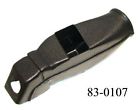
( Part Type: Switch Start ), ( Country/region Of Manufacture: Germany )
Review MERCEDES Choke Hot Ponton 190 Switch Start fits 190SL 220SE 220S 300SL
The 190SL, 220SE, 220S Ponton, and 300SL Start switch are all essential components of your Mercedes-Benz classic car, each serving a unique function in maintaining the smooth operation of your vehicle.
The 190SL choke switch is a vital part of your 190SL's carbureted engine. It allows you to control the amount of air entering the engine during cold starts to ensure a smooth and reliable ignition. This switch is typically located on the dashboard and operates a mechanical choke mechanism. The high-quality design ensures a secure fit in your dashboard, while the durable construction ensures reliable operation.
The 220SE and 220S Ponton are also equipped with choke switches, serving the same purpose as the 190SL switch. These switches are designed to fit seamlessly into the dashboard of your classic Mercedes-Benz, with a secure fit ensuring no rattling or vibration during operation. The high-quality materials used in their construction ensure a long lifespan and reliable operation.
The 300SL Start switch is a crucial component of your 300SL's electrical system. It allows you to start the engine by engaging the starter motor, which turns the engine over and sparks ignition. This switch is typically located on the steering column and operates a mechanical mechanism that engages the starter motor. The high-quality design ensures a secure fit in the steering column, while the durable construction ensures reliable operation.
In summary, these switches are essential components of your classic Mercedes-Benz, ensuring a smooth and reliable operation of your vehicle. The high-quality materials used in their construction and secure fit in your dashboard ensure a long lifespan and reliable operation. If you're in need of replacements for these switches, our product is a perfect fit, designed to match the original specifications of your classic Mercedes-Benz.
190SL, Choke Mercedes 220SE, 220S Ponton, and 300SL (Switch) are classic Mercedes-Benz models, each with its unique characteristics and considerations. Let's explore the pros and cons of purchasing any of these vehicles to help you make an informed decision.
190SL (W190): Pros:- Distinctive and timeless design
- Generally in good condition due to its popularity and collectability
- Reliable engine, known for its longevity
- Parts are readily available due to the vehicle's popularity
Cons:- Higher maintenance costs due to age and complex mechanical systems
- Limited power and acceleration compared to newer models
- Tight quarters for taller individuals due to the classic roadster design
220SE and 220S Ponton: Pros:- Spacious interior and elegant design
- Reliable engine and drivetrain
- Affordable compared to other classic Mercedes-Benz models
- Many aftermarket parts and services available
Cons:- Lower performance compared to newer models
- Some models may require chokes for starting, which can be inconvenient
- Potential for rust and corrosion due to the vehicle's age
300SL (Switch): Pros:- Iconic and extremely desirable classic Mercedes-Benz model
- Powerful engine and excellent performance
- High-quality craftsmanship and attention to detail
- Rare and valuable, making it a great investment for collectors
Cons:- High maintenance costs due to its age and complexity
- Not as spacious as other models, especially for taller individuals
- Can be challenging to find parts due to its rarity
Conclusion:Each of these classic Mercedes-Benz models offers unique characteristics and driving experiences. The 190SL is a great choice for those looking for a timeless roadster with a reliable engine and a rich history. The 220SE and 220S Ponton are fantastic options for those seeking a spacious and elegant classic Mercedes-Benz with lower maintenance costs.
The 300SL is an excellent investment for collectors and enthusiasts who appreciate its iconic design, powerful performance, and rarity. However, it requires significant maintenance and investment due to its age and complexity.
Ultimately, the best choice for you will depend on your preferences, budget, and driving needs. Consider factors such as your desired driving experience, maintenance and repair costs, and investment potential before making a decision.
Details:
No reserve.
- $54.99-$141.96
specifications vintagacheatin:
- for models: 190sl, 220se, 220s, 300sl
- for makes: Mercedes
- part type: Switch Start
- country/region of manufacture: Germany
General:
- Motors > Parts & Accessories > Vintage Car & Truck Parts > AC & Heating
- condition: Used
- in stock: Yes
Offer:
- quantity: 1
- # bids: 0
- best offer: true
- Started: April 8, 2015, 3:25 am
- # Sold: 0
Ratings:
- AAA+++ TRANSACTION THANK YOU FOR SHOPPING WITH US!!!!!!!!!!!!! 03-27-15
- Great ! Thanks for your purchase. AAAAAA++++++. 03-28-15
- I got my boots way earlier than expected and they are in perfect condition! Thx! 04-03-15
- Great Customer, Fast Payment, Hope To Do Business Again!! A+++++++++++++++++++++ 03-27-15
- Great communication. A pleasure to do business with. 03-27-15
Payments:
- PayPal
Returns:
- policy: no returns
Shipping:
- type: Flat
- handling: 3 days
- cost: $6.0
Seller:
- zipcode: 95030
- city: Los Gatos, California
Mercedes Is Similar To:
- 0008206010 Mercedes Heater Defrost Switch (45.3% similar) Marketing, listing apps, application. See pictures. Used mercedes Benz heat defrost button, excellent condition. For more mercedes parts...(December 2nd, 2017)
- 0048206810 Acm Mercedes Pressure Drier Switch Germany (42.4% similar) This is a new, never installed receiver drier pressure switch for the air conditioning system of several mercedes-Benz automobiles. Its the oem brand acme, and made in germany...(November 10th, 2018)
- 10-120-830-00-18 Mercedes Ponton Heater Box (38.9% similar) 180, 190, 219, 220A, 220S, 220SE. Otherwise ready for daily driver. Mercedes ponton clamp for connecting the cardboard heater box and fan housing. Maybe 190SL. Needs to be cleaned and repainted. Called tightening strap in catalogue...(February 11th, 2018)
- 101208300718 Mercedes Insect Screen Ponton (46.7% similar) I do combine shipping charges. Screen is a used genuine oem mercedes-Benz part ref P999202 removed from W120. Package deals come with a discount off total price. Message me if you would like to create a package deal of 5 items or more. These are used parts with imperfections, wear age and light ...(August 8th, 2018)
- 101208310043 Mercedes Heater Flap Ponton Se (46.3% similar) These are used parts with imperfections, wear age and light scratches as seen in the pictures.package deals come with a discount off total price. Flap is a used genuine oem mercedes-Benz part ref P999507 P999506 removed from W120 180D 1958 over 10,000 items in stock nos, used, restored item . Sale...(April 10th, 2018)
- 101208310388 Mercedes Defrost Vent Tube Ponton (43.2% similar) Message me if you would like to create a package deal of 5 items or more. Sale is for please look at pictures carefully. Cracking around bottom edges. I do combine shipping charges. Package deals come with a discount off total price. Vent is a used genuine oem mercedes-Benz part ref P999206 P999207 ...(August 8th, 2018)
- Housing Mercedes 0051 Assembly Switch 1973 1078210165 1078210051 0018352906 1078210165 Oem 450sl W107 (28.9% similar) You are viewing a mercedes A/C blower control switch housing assembly that was removed from a 1973 450SL R107...(May 30th, 2015)
- 200637 Mercedes Lighted Heater Fan Control Switch Knob (47.1% similar) I combine chipping. It has not been tested, but all moving parts move as they should. I have many more parts for the W110 W111 W114 and W115. I removed this from a 1962 W111 220S. Light bulb needs to be replaced. Up for sale is a mercedes Benz W110 W111 W112 heater fan control switch B1. Make an ...(May 13th, 2018)
- Mercedes Exterior 220s Door 220se Handle Ponton Key W180 Original Set W121 (43.2% similar) No breaks or damage, shiny chrome, but heavy pitting. Posted with the android app free. There may be more applications. Some screw rosettes remain, and some rubber seals. Items shipped outside of the us will not be declared as gifts or valued at less than the selling price. Proper for W105,W120, ...(April 20th, 2015)
- 70-236841-1 Mercedes Thermo Time Switch Eckler (41.4% similar) This is the air conditioning high pressure sensor that functions off side of system located next to A/C accumulator. I'ts function is to monitor the auxiliary cooling fan on and off or if pressure in system goes too high it shuts down...(June 7th, 2018)
- 70-236998-1 Mercedes Benz Chassis Blower Switch Knob (46.2% similar) ...(July 15th, 2018)